Madeira and the Azores: Slow Days by the Ocean
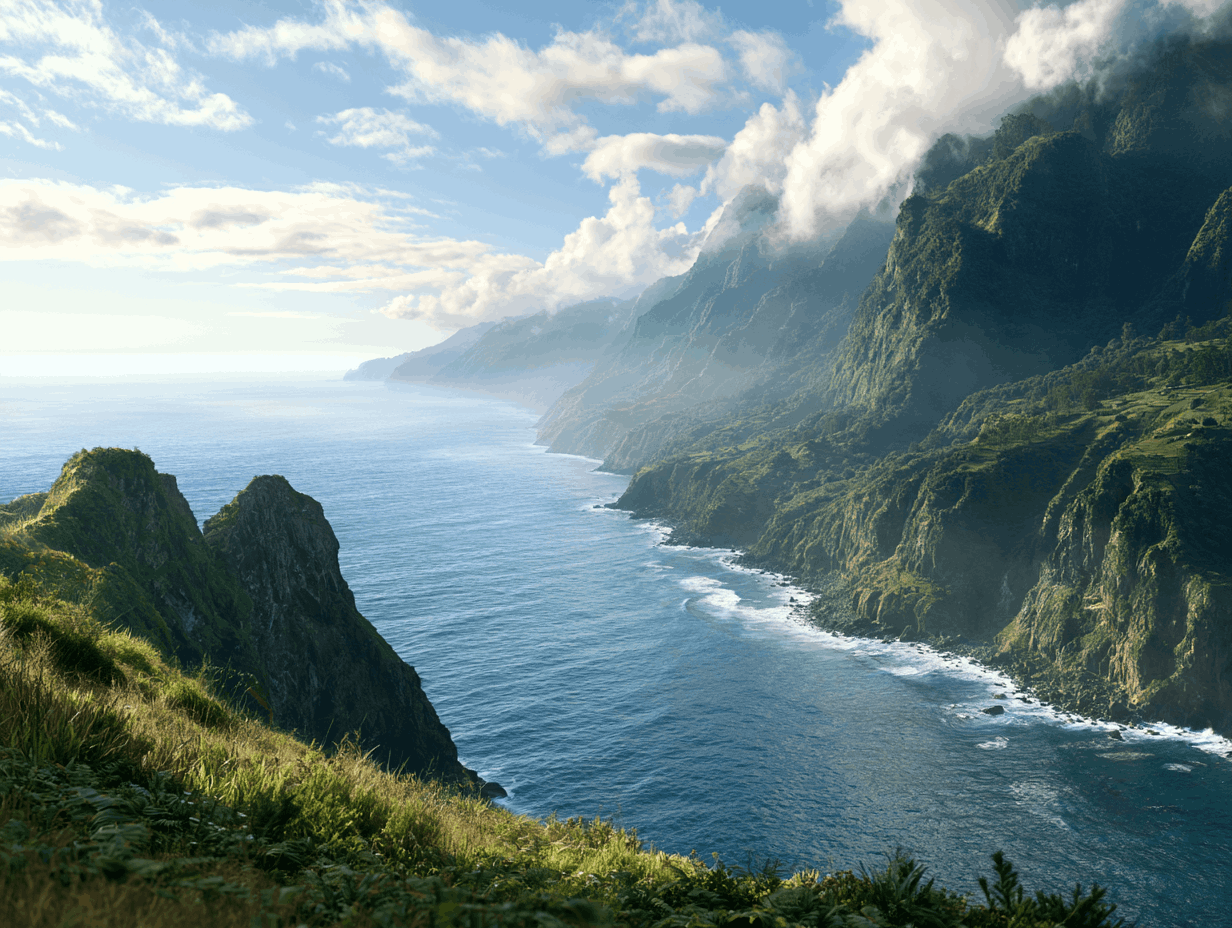
Lush cliffs, hidden coves and unhurried island time.
Both Madeira and the Azores sit out in the Atlantic and both know how to slow a week down without trying too hard. The cliffs rise steep and green, the coves stay hidden until you walk a bit, and the days stretch in a way that feels natural once you stop rushing.
Madeira’s north coast is the quieter side. The roads cling to the cliffs and the sea sits far below. You can base yourself in a small village and spend the days following levada paths that cut through forest and open suddenly onto ocean views. Some of the paths lead down to rocky coves where the water is clear and the only sound is the waves. The air stays mild most of the year and the light softens early in the evening. Local shops open when they open and close when they feel like it. That rhythm becomes easy to follow after a day or two. A simple house with a terrace overlooking the water is enough. Mornings start with the sound of the sea and the rest of the day can unfold without a fixed plan.
The Azores feel even more removed, especially the outer islands. Sao Jorge has long thin ridges and steep pastures that drop straight to the ocean. Hidden coves appear at the bottom of narrow tracks and the water stays calm inside them on good days. Flores is greener still, full of small lakes and waterfalls that feed into the sea. The roads are quiet and the villages spaced out. You can walk for hours along the cliffs and meet almost no one. The weather shifts fast but that only adds to the sense that time is moving differently here. Evenings are for watching the light change over the Atlantic from a low wall or a simple balcony. Signal comes and goes and after a while it stops mattering.
What both places share is the lack of urgency. The ocean is always close, the cliffs stay lush, and the coves reward the short walks it takes to reach them. You don’t need a packed itinerary. A few good maps, comfortable shoes and the willingness to stop when something looks interesting is usually enough. The days fill themselves with the sound of water, the smell of wet earth after rain, and long views that keep changing.
Seven days here tend to reset the pace completely. The islands ask very little and give a lot of quiet in return. Leave the schedule loose, pack light, and let the ocean set the tempo. The slow days arrive almost on their own once you stop trying to fill every hour.